
Mean, median, mode and range
One small step at a time. Ask for a clue whenever you need one.
Ask about your own question- Step 1
- Step 2
- New question
What is the mean of 4, 8, 6, 5, 7?
Common mix-up
In this example, a student wrote 7.5.
Mateo divided the total 30 by 4, one count short. He added the five values but used the wrong number of divides.
Guided example. Your answers aren’t saved or sent.
See why this works
How many numbers do I divide by?
Mateo found the mean of 4, 8, 6, 5, 7 by adding to 30 and dividing by 4, writing 7.5. There are 5 numbers.
The mean is the total shared equally: add all the values, then divide by how many there are.
The mean is a fair-sharing idea: pour all the values into one pile, then divide the pile into as many equal shares as there are values. The size of one share is the mean, the number that stands in for the whole data set. If every number in the list were replaced by the mean, the total would come out the same, which is what the mean really promises.
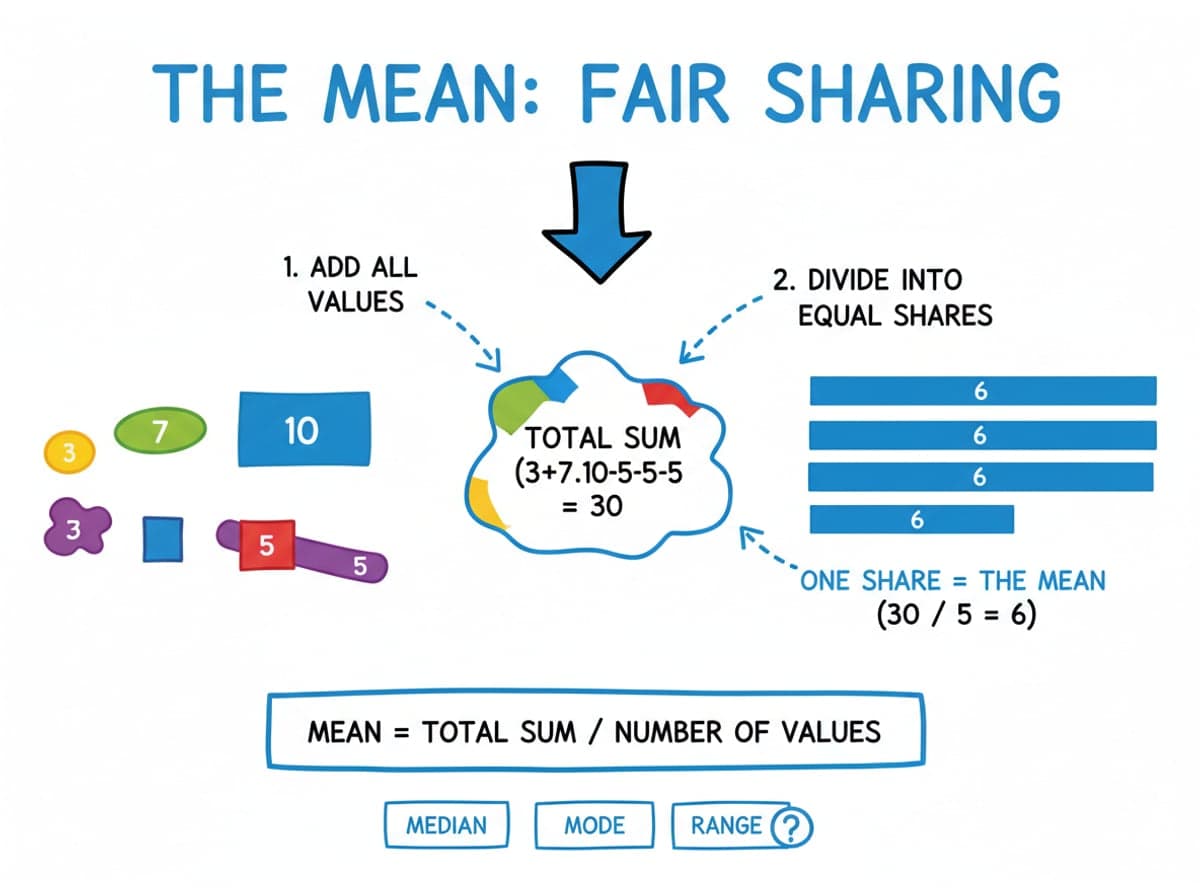
Mateo's mistake was dividing by the wrong count. He totaled 30 correctly, then divided by 4, landing on 7.5. The list 4, 8, 6, 5, 7 has five values, not four, so the 30 must be split five ways. Dividing by 4 means one value got a free ride, and the mean came out bigger than it should, well above the largest list value's neighborhood.
The fix is to count the data points as deliberately as you add them. Five values means five shares: 30 / 5 = 6. Halfway check: the mean must sit somewhere in the middle of the data range, and 6 sits between 4 and 8, so it is at least plausible. The total divided by the number of values is the whole formula, so the count matters as much as the sum.
Check by multiplying the mean by the count: 6 * 5 = 30, which is the original total. That reverse move always works for averages and catches count mistakes instantly, because the total is exact and unforgiving. If the multiplication does not return the original total, recount the values and redivide. The recount takes a second and saves a wrong answer.
Keep this idea
Count the values, divide the total by that count, and multiply back to check.
The practice checks apply only to the displayed examples. Follow your teacher’s guidance for your own assignments.
Get help with your own questionA practice lesson each week.
A short practice lesson for your inbox. Free, with a one-click unsubscribe.
Search all 106 free lessons for “Mean, median, mode and range”